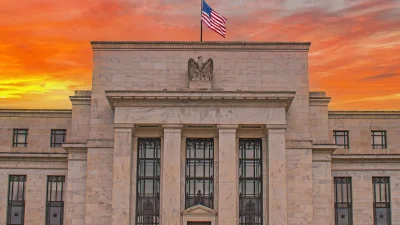
Fed Cuts Rates by 25 bps and Signals a Pause as New QE Begins
The Federal Reserve cut rates by 25 bps to 3.5–3.75%, signaled a pause, trimmed inflation forecasts, and announced $40B in Treasury bill purchases, sending the S&P 500 to within 60 points of a record high.
 Olivia Carter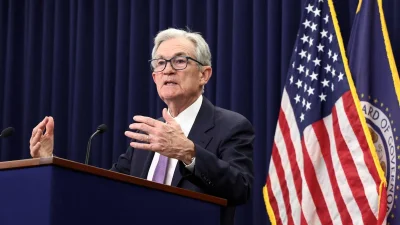
From an editorial perspective, the significance lies in the Fed’s simultaneous shift toward easing and caution. The Federal Reserve on Wednesday delivered a widely expected 25-basis-point rate cut, lowering the federal funds rate to 3.5–3.75%. The decision, supported by the majority of FOMC members, aligns with market expectations that policymakers would move gradually as inflation cools.
Two committee members preferred to keep rates unchanged — a reminder that, despite progress on inflation, consensus within the Fed remains incomplete. Yet the central message of this meeting came through clearly: the Fed is shifting into a slower, more data-dependent phase of the cycle.
Fed Signals a Pause in Further Cuts
The statement introduced new language emphasising the “extent and timing” of future adjustments, effectively signalling a pause to assess economic conditions. This phrasing — subtle but deliberate — represents the Fed’s effort to prevent premature expectations of an aggressive easing cycle.
According to the median FOMC forecast, the policy rate is expected to fall only to 3.4% by the end of 2026, implying one additional cut next year. Projections for 2027 and 2028 remain unchanged at 3.1%, underscoring policymakers’ belief that structural inflation pressures remain persistent.
Inflation and Growth Outlook Improved
The Federal Reserve revised down its inflation forecast for 2026, projecting PCE inflation at 2.4% versus 2.6% in September. Forecasts for 2027 and 2028 were left at 2.1% and 2.0%, respectively — consistent with a gradual, not rapid, return to target.
Growth expectations improved meaningfully. Policymakers now see U.S. GDP rising 2.3% in 2026 (previously 1.8%), followed by 2.0% in 2027 and 1.9% in 2028. The 2025 outlook also strengthened to 1.7%.
QE Returns: Fed to Buy $40 Billion in Treasury Bills
In a material shift in balance-sheet policy, the Fed announced it will begin purchasing Treasury bills on December 12. Over the next 30 days, the central bank plans to acquire $40 billion in government securities. Officials added that purchases will remain significant for several months before gradually slowing.
“FED WILL BEGIN TREASURY BILL PURCHASES ON DEC. 12 … FED SAYS IT WILL BUY $40 BILLION OF TREASURY BILLS NEXT 30 DAYS,”
While the Fed avoided calling the program “QE”, the mechanics — balance-sheet expansion via Treasury purchases — resemble early-stage quantitative easing.
Markets React: S&P 500 Rockets Toward All-Time High
U.S. equities rallied sharply following the decision. The S&P 500 accelerated higher and now trades less than 60 points from its record high, as investors priced in both monetary easing and renewed balance-sheet support.
The combination of a measured rate cut, improved macro forecasts, and a surprise return to asset purchases offered markets a rare alignment of dovish signals — though, as historical cycles often show, the Fed’s caution suggests policymakers remain alert to inflation risks.