BRICS Explore Linking CBDCs to Build Independent Payment System
BRICS countries are studying the integration of central bank digital currencies to create a unified payment system for trade and tourism, aiming to reduce reliance on the US dollar and Western financial infrastructure.
 Olivia Carter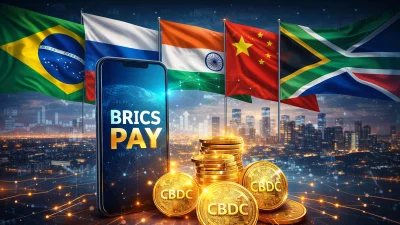
BRICS countries are exploring the possibility of linking their central bank digital currencies (CBDCs) to create a unified payment system for trade and tourism. The initiative is part of broader efforts to develop alternative financial infrastructure and reduce dependence on the US dollar.
According to Germany’s Berliner Zeitung, the idea is gaining traction as member states look for more resilient and politically independent mechanisms for cross-border payments.
India Pushes CBDC Integration
The proposal gained momentum after the Reserve Bank of India suggested in January that CBDCs should be interconnected to simplify cross-border transactions, particularly in trade and tourism.
Sources indicate that the initiative is expected to be included on the agenda of the 2026 BRICS summit in India. If approved, it would represent the first official attempt by BRICS nations to integrate their digital currencies within a single transactional framework.
Focus Shifts From a Common Currency to Payments
Discussions about reducing reliance on the US dollar are not new within BRICS. However, rather than pursuing a long-debated common currency, attention has increasingly shifted toward building a shared transaction system.
The goal is not monetary unification, but the creation of an independent payment architecture capable of supporting trade, tourism, and financial flows within the bloc.
Brics Pay and Alternative Infrastructure
A key pillar of this strategy is Brics Pay, a platform designed to link national payment systems across member states and, over time, integrate their CBDCs.
Such a system would allow transactions to be processed directly, bypassing dollar-based clearing mechanisms and Western-dominated networks such as SWIFT.
Early Stage, Major Challenges
Despite growing political interest, the project remains at an early stage. None of the largest BRICS economies has yet fully rolled out a central bank digital currency, with all currently operating pilot programs.
Significant hurdles remain, including technical interoperability, regulatory alignment, data access rules, governance structures, and mechanisms to address trade imbalances between member states.
Geopolitics and Sanctions Risk
The initiative is being actively promoted by India, which currently plays a leading role within BRICS, and is widely viewed as a response to sanctions risk and external economic pressure.
For countries such as Russia and Iran, the development of an independent payments framework is seen as a way to protect intra-bloc financial flows from geopolitical disruptions.
While the integration of CBDCs remains a long-term ambition, the direction is clear: BRICS nations are prioritizing transactional sovereignty over the creation of a single currency, signalling a gradual but meaningful shift in the global financial architecture.
-
 Bank of England Urged to Prepare for ‘Alien Shock’ ScenarioCentral Banks
 -
DOJ Subpoenas Raise Questions Over Federal Reserve IndependenceCentral Banks
-
Fed Cuts Rates by 25 bps and Signals a Pause as New QE BeginsCentral Banks
-
Powell Says Trump Has Launched Criminal Investigation Into the FedCentral Banks
-
December 1 QT Finale Fuels Expectations of a Fed Return to QECentral Banks