5 Signs You’re Not Really Investing — Just Easing Your Conscience
Many people call themselves investors, but few actually invest. Here are five clear signs you’re not building wealth — just telling yourself you are.
 Emily Turner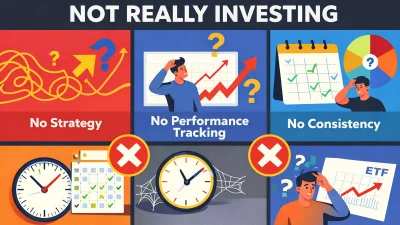
After years of talking to investors, one uncomfortable truth stands out: most people who say they invest don’t actually do it.
They buy something once or twice a year, feel financially responsible — and move on. That’s not investing. That’s conscience management.
If this feels familiar, read on.
1. You Don’t Have a Strategy
Let’s be direct. What’s your strategy?
Not “I buy stocks and crypto.” A real strategy answers specific questions:
- How much of your portfolio is in equities, bonds, and alternatives?
- When do you rebalance?
- Under what conditions do you reduce or exit positions?
If your answer is “I decide based on the situation,” you don’t have a strategy. You have chaos.
2. You Don’t Track Your Returns
Quick check: what’s your portfolio return over the past year? Over its lifetime?
“I think I’m up overall” isn’t an answer.
Investors know the numbers: +11%, +7.4%, –2.6%. If you don’t, you’re not investing — you’re guessing.
3. There’s No Consistency
Real investing is systematic.
Monthly. Quarterly. Automatically.
If you invest once in January, skip six months, then add a small amount later, that’s not a strategy. It’s impulse buying dressed up as financial literacy.
4. “Buy and Forget” Is Your Excuse
Yes, buy-and-hold is a valid approach. But even long-term portfolios require review.
If you bought assets years ago and never reassessed them — never checked risks, performance, or allocation — that’s not discipline. That’s neglect.
5. You Don’t Understand What You Own
“I have a bond fund.” “An ETF tracking the S&P 500.”
That’s fine. But what’s inside?
If you can’t explain the holdings, risks, and drivers of return in simple terms, you didn’t invest — you followed a recommendation.
The Hard Truth
Investing is not about occasionally buying financial products.
Investing is:
- Strategy
- Discipline
- Performance tracking
- Consistency
- Understanding risk
If at least three of these points don’t describe you, you’re not investing. You’re playing an investor.
And markets eventually punish that behaviour.
How to Start Doing It Right
You don’t need to overhaul everything overnight.
- Create a simple performance-tracking table
- Define a basic asset allocation
- Set up automatic contributions
- Review your portfolio at least once a year
Or keep telling yourself you’re investing.
The choice is yours.
-
 Trying to “Buy the Dip”? These S&P 500 Numbers Tell a Different StoryInvesting Strategies
 -
SGOV ETF Explained: How Ultra-Short U.S. Treasuries Work as a Cash AlternativeInvesting Strategies
-
Ten Megatrends Investors Are Watching for the Next DecadeInvesting Strategies
-
How the Halo Effect Distorts Investment DecisionsInvesting Strategies
-
How Many Stocks Should You Hold in a Portfolio?Investing Strategies
-
Top Dividend Stocks for 2026: High Yields, but at What Cost?Investing Strategies