How to Invest Through Economic Cycles
Learn how economic cycles influence markets and which sectors tend to outperform during recession, recovery, expansion, and slowdown phases.
 Emily Turner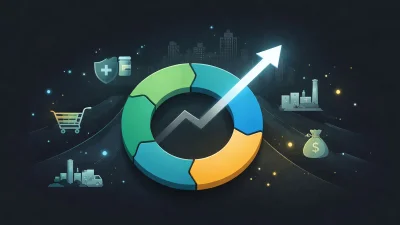
Markets rarely move in a straight line. Instead, the economy evolves in waves — periods of contraction, recovery, expansion and eventual slowdown. Understanding these phases helps investors position their portfolios more strategically rather than reacting emotionally to headlines.
In many ways, investing through economic cycles is about recognising where the economy likely sits today and where it may move next. Markets are forward-looking, so investors who anticipate shifts earlier often gain an advantage.
Let’s break down the four main phases of the economic cycle and what they typically mean for investment strategy.
1. Contraction: Defensive Positioning
During the contraction phase, economic activity slows, corporate earnings decline and consumer confidence weakens. Businesses may reduce hiring and investment while financial conditions tighten.
In this environment, investors usually shift toward defensive sectors — industries that tend to remain stable even during economic stress.
- Consumer staples
- Utilities
- Healthcare
These sectors provide essential goods and services. People still buy food, medicine and pay for electricity even during downturns.
2. Recovery: Early Signs of Growth
Recovery begins when economic conditions stabilise and early growth signals appear. Central banks may start easing monetary policy, financial conditions improve and business activity slowly rebounds.
Markets often start pricing in this recovery months before economic data fully confirms it.
Sectors that historically benefit in the early recovery stage include:
- Technology
- Industrials
- Consumer discretionary
Investors begin positioning for future growth rather than focusing purely on stability.
3. Expansion: Strong Economic Momentum
The expansion phase is characterised by accelerating economic growth, rising corporate profits and strong consumer demand. Credit flows more easily and business investment increases.
This is typically the most favourable environment for cyclical sectors — industries that benefit directly from stronger economic activity.
- Industrials
- Financials
- Materials
- Technology
Companies tied to construction, manufacturing, lending and capital investment tend to outperform during this stage.
4. Slowdown: Preparing for the Next Shift
Eventually, growth begins to moderate. Inflation pressures may build, central banks tighten policy and the pace of expansion starts to cool.
While economic activity remains positive, investors often begin reducing risk exposure.
Typical positioning during a slowdown phase includes:
- Financials
- Healthcare
- Consumer staples
The focus gradually shifts from aggressive growth toward stability and resilience.
Why Timing Matters
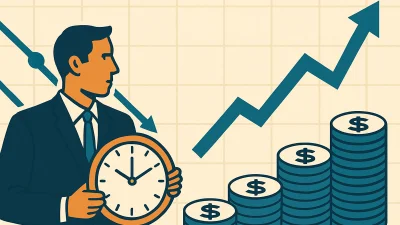
The most important concept for investors is that markets anticipate economic changes. Equity markets often start rotating toward the next winning sectors several months before the economy officially enters the next phase.
Markets do not react to the present — they price the future.
Because of this, successful investors often look for early signals: changes in monetary policy, shifts in credit conditions, and turning points in business activity indicators.
Building a Cycle-Aware Portfolio
Investing through economic cycles does not require perfect predictions. Instead, it involves gradually adjusting exposure as conditions evolve.
- Monitor macroeconomic indicators and central bank policy.
- Identify which phase the economy may be approaching.
- Adjust sector allocation accordingly.
- Stay diversified to reduce timing risk.
Economic cycles repeat over time — even if their exact timing changes. Understanding these patterns can help investors avoid emotional decisions and build portfolios that adapt to shifting market environments.
In the end, successful investing is not about predicting every move. It’s about recognising the broader rhythm of the economy and positioning ahead of the crowd.
-
 Ten Megatrends Investors Are Watching for the Next DecadeInvesting Strategies
 -
Trying to “Buy the Dip”? These S&P 500 Numbers Tell a Different StoryInvesting Strategies
-
5 Signs You’re Not Really Investing — Just Easing Your ConscienceInvesting Strategies
-
Why Emotions Are the Fastest Way to Lose Money in MarketsInvesting Strategies
-
SGOV ETF Explained: How Ultra-Short U.S. Treasuries Work as a Cash AlternativeInvesting Strategies
-
Why Some High Earners Struggle in RetirementInvesting Strategies