Oil Near $100 and Trade Tensions Pressure U.S. Stock Futures
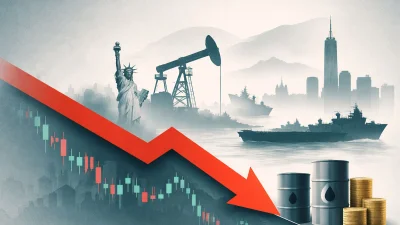
Rising oil prices, escalating trade tensions and geopolitical risks are weighing on market sentiment as investors prepare for key economic data and Treasury auctions.
 Daniel Brooks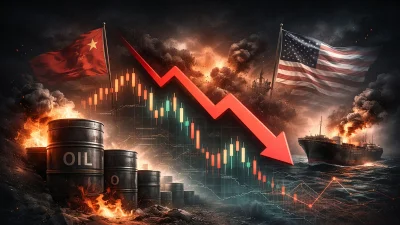
Global markets are facing renewed volatility as geopolitical risks and trade tensions combine to create a more fragile macro backdrop.
Two external forces are shaping sentiment: escalating conflict risks in the Middle East and a fresh wave of trade investigations launched by the U.S. administration.
The International Energy Agency (IEA) announced what could become the largest coordinated release of strategic oil reserves in its history — roughly 400 million barrels. The United States separately confirmed plans to sell an additional 172 million barrels from its Strategic Petroleum Reserve.
Despite the scale of these measures, the oil market remains skeptical about their ability to quickly offset potential disruptions in shipments through the Strait of Hormuz, one of the world’s most critical energy corridors.
Brent crude has climbed toward $100 per barrel, while WTI is trading near $95, reflecting persistent concerns about supply stability.
Trade tensions add a second layer of risk
At the same time, the Trump administration has launched new trade investigations under Section 301 targeting China, Mexico, the European Union and several Asian economies.
The combination of rising energy prices and potential disruptions to global trade is creating a challenging environment for financial markets.
Investors now face a dual risk: higher inflation pressures driven by energy prices and slower global trade flows if tariffs or retaliatory measures escalate.
Once again, markets are recalibrating expectations. Higher oil. Higher policy uncertainty.
Market performance and technical levels
The previous trading session ended with major U.S. indices showing little directional movement.
- S&P 500: closed slightly below the 6800 level, continuing to move within a short-term consolidation range.
- Nasdaq 100: finished the session near 25,000, forming a local sideways structure.
Futures for both indices are slightly lower ahead of the open.
For the market to stabilize and attempt a renewed upside move, the following levels are key:
- S&P 500 support: 6700
- Nasdaq 100 support: 24,500
- S&P 500 resistance: 6800
- Nasdaq 100 resistance: 25,000
If support levels hold, consolidation may continue. A break lower could accelerate volatility.
Macro events in focus today
Investors are also monitoring several macroeconomic releases and policy developments:
- Weekly U.S. initial jobless claims
- February CPI, which came in at 2.4%, broadly in line with expectations
- U.S. Treasury auction of 30-year government bonds
- Oil market developments amid attacks on energy infrastructure in the Persian Gulf region
Sector performance
Sector performance during the previous session was mixed.
Cyclical sectors:
- Weakest performers: XLRE, XRT, XLF
- Energy sector (XLE) closed higher as oil prices surged
Growth sectors:
- Leaders: TAN, IPO
- Lagging sectors: IBB, XLC
Defensive sectors:
- Consumer staples (XLP) showed a modest corrective move
Intermarket signals
Several cross-asset indicators suggest volatility may remain elevated.
- Oil: continues to trade within a medium-term upward channel above $90
- U.S. Treasury yields: breaking above the 4.2% resistance level
- VIX: consolidating below 26 while maintaining an upward trend since late February
- Gold: testing a local trend line near the 5200 level while remaining in consolidation
In short, markets are navigating a complex mix of geopolitics, energy supply risks and trade policy uncertainty — conditions that historically favour higher volatility across asset classes.
-
 S&P 500 Futures Slide as Middle East Escalation Fuels VolatilityStocks
 -
S&P 500 Holds Near Key Levels as Markets Weigh Middle East Risks and U.S. DataStocks
-
S&P 500 and Nasdaq Futures Trade Sideways as PMI and Labor Data Take Center StageStocks
-
News Flow Tilts the Balance Toward BuyersStocks
-
S&P 500 and Nasdaq Futures Consolidate Near Record Highs as Volatility Stays SubduedStocks
-
Trump’s Davos Speech Sets the Tone as Markets Brace for Trade and Geopolitical RisksStocks