Why Oil Is Rising Again — And Why the Rally Looks Fragile
Brent crude has climbed above $70 per barrel for the first time since July, driven largely by geopolitical risk tied to Iran rather than improving supply-demand fundamentals.
 Olivia Carter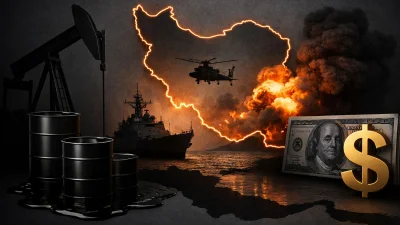
Brent crude has climbed above $70 per barrel for the first time since last July, marking a sharp reversal for a market that spent most of 2025 in decline. Prices are up roughly 15% since the start of January, recovering part of the nearly 20% drop recorded over the past year.
What makes this rally notable is not its size, but its source. The move has been driven far more by geopolitics than by any meaningful shift in oil fundamentals.
Geopolitical risk returns to the price
The immediate catalyst has been escalating rhetoric from the U.S. president, who has openly threatened military action against Iran if Tehran refuses to engage in a new nuclear agreement. According to U.S. officials, American naval forces have already been repositioned in the region, with the White House signalling readiness to act “quickly and forcefully.”
Markets reacted swiftly. Iran produces around 3 million barrels of oil per day, but the bigger concern lies elsewhere. Roughly a third of global seaborne oil trade passes through the Strait of Hormuz. Any disruption — whether from direct conflict, temporary closures, or mining of shipping lanes — would have immediate and severe consequences for global supply.
Weather and the dollar add short-term support
Geopolitical risk has not been the only factor tightening the market in recent days. A powerful winter storm across the southern United States temporarily knocked out up to 2 million barrels per day of production at its peak, equivalent to roughly 15% of total U.S. output. Exports from the Gulf Coast were briefly halted, and parts of the infrastructure are still in the process of restarting.
At the same time, the U.S. dollar has weakened to near four-year lows. For dollar-denominated commodities like oil, this acts as an additional tailwind, mechanically supporting higher prices even without stronger physical demand.
Fundamentals remain soft
Strip away these temporary factors, however, and the underlying picture looks far less constructive. Global production continues to grow faster than consumption, while inventories are building across key regions.
OPEC+ has so far refrained from increasing output quotas, but the restraint appears defensive rather than bullish. The group is attempting to stabilise prices, not responding to an improving demand outlook.
China remains one of the few sources of support, continuing to add close to 1 million barrels per day to its strategic reserves. Without this steady accumulation, pressure on prices would likely be more visible.
A rally built on risk premium
In broader terms, the current $70 level is being held almost entirely by a geopolitical risk premium. As historical cycles often show, such premiums can evaporate quickly.
If tensions around Iran ease, or if markets conclude that recent threats will not translate into concrete action, oil prices could retreat just as rapidly as they rose. For now, the rally reflects fear rather than fundamentals — and that makes it inherently fragile.
-
 The Oil Market Looks Weak — and 2026 May Bring More of the SameCommodities
 -
Silver’s Rally Is Reviving an Old Signal for Oil MarketsCommodities
-
Venezuela Slashes Oil Output as US Blockade Halts ExportsCommodities
-
A Massive Technical Breakout Suggests Silver’s Run Might Just Be BeginningCommodities
-
SLV in Focus as Silver Enters a New Structural PhaseCommodities
-
Why Copper Is Outperforming Gold — And What It Means for Metals MarketsCommodities