The Oil Market Looks Weak — and 2026 May Bring More of the Same
Saudi Arabia’s Tadawul All-Share Index has lagged global equity markets this year amid sliding oil prices and weak investor demand for oil plays, with Brent crude dipping below $60 a barrel and broad energy sector pressure weighing on market sentiment.
 Daniel Brooks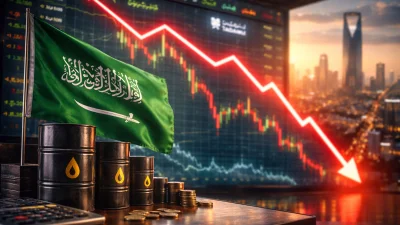
The Tadawul All-Share Index (TASI) — the benchmark for the Saudi stock market — has notably underperformed global equities in 2025, with overall performance turning negative compared with the end of 2024 levels. While many global markets stayed in positive territory this year, Saudi stocks have struggled amid weakness in the oil sector, underlining continued investor skepticism toward fossil fuel exposure.
Recent trading data show that major Gulf benchmarks, including the Tadawul index, have weakened alongside a downturn in crude oil prices. On December 16, 2025, the Saudi benchmark slid to a three-month low, with key components such as Saudi Aramco and Al Rajhi Bank posting declines amid broad market weakness. Oil prices for Brent crude dropped below $60 per barrel — the lowest level seen since earlier this year — exerting downward pressure on sentiment across energy-dependent markets.
Saudi Arabia’s stock market has been sensitive to the prolonged slump in oil prices, with the energy sector representing a heavy weighting in the index. While exact year-to-date index performance varies daily, broad market data indicate TASI trading significantly below its 2024 closing levels, reflecting the drag from energy names and cyclical sectors more reliant on oil price stability.
The decline in crude pricing comes amid expectations of a global oil supply surplus for 2025–26, prompting concerns about further downside risks. Analysts note that an expanding market surplus could push Brent prices toward $50 a barrel if demand fails to absorb higher output — a scenario that would further strain profitability for major oil producers and their associated equities.
Still, there are potential stabilizing forces. At lower price levels near $50 per barrel, high-cost producers — particularly in the U.S. shale sector — may begin to cut back production due to shrinking margins, which could help tighten the market and provide fundamental support to prices over time.
For now, persistent oil weakness continues to shape investor behavior in the region. Despite broader global market gains in equities throughout 2025, the underperformance of the Saudi market highlights how the Kingdom’s economy and capital markets remain closely tied to the oil complex — a dynamic that investors will monitor closely heading into 2026.
-
 SLV in Focus as Silver Enters a New Structural PhaseCommodities
 -
A Massive Technical Breakout Suggests Silver’s Run Might Just Be BeginningCommodities
-
Why Copper Is Outperforming Gold — And What It Means for Metals MarketsCommodities
-
Copper Supply Shock Deepens as 2026 Deficit Risks GrowCommodities
-
Central Banks Step Up Strategic Gold Accumulation Amid Macro UncertaintyCommodities
-
Diamond Prices Finish 2025 Deep in the Red, Smaller Stones Hit HardestCommodities