Silver’s Rally Is Reviving an Old Signal for Oil Markets
Silver’s surge to record highs has historically coincided with oil bull markets. With Brent still lagging, investors are watching a potential intermarket divergence.
 Olivia Carter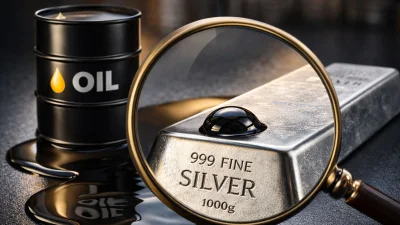
From an editorial perspective, the current divergence between silver and oil prices is becoming increasingly difficult for markets to ignore.
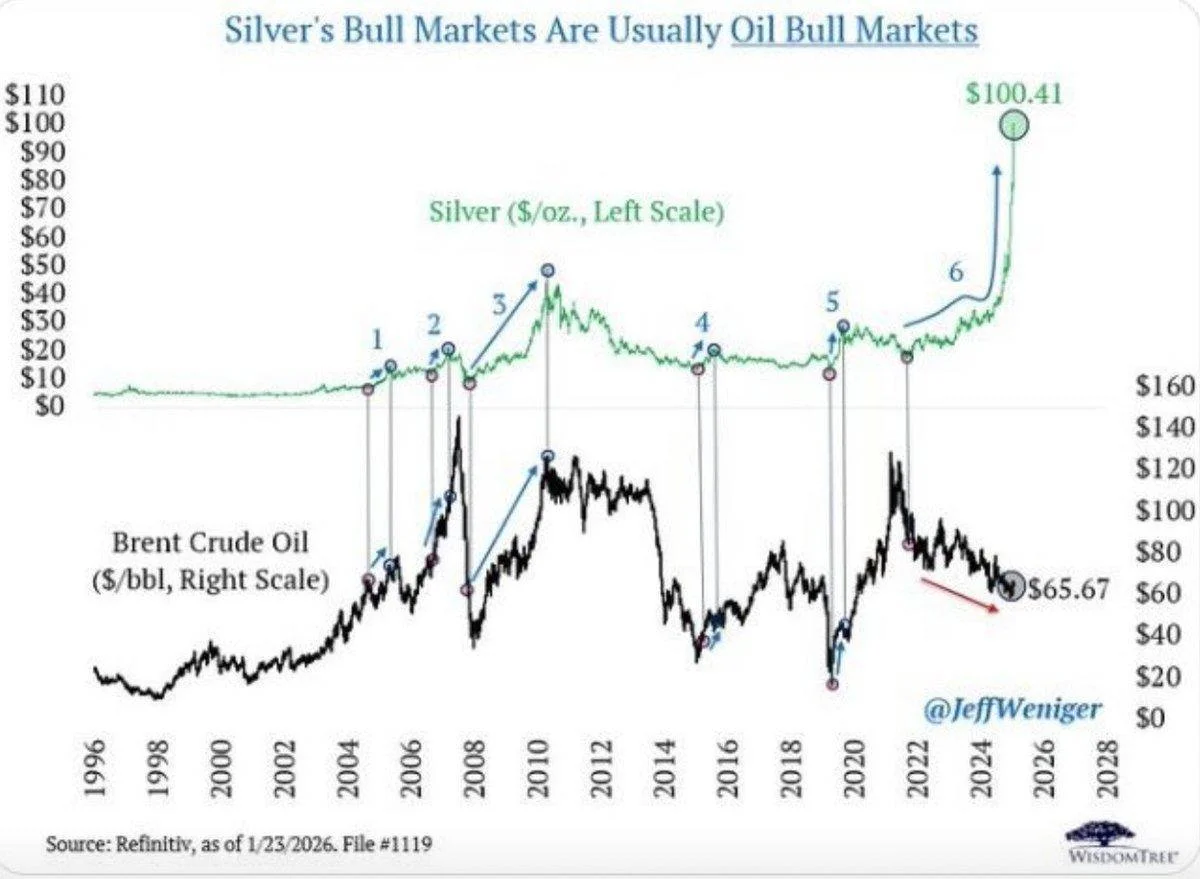
Historical data shows that major bull markets in silver have almost always coincided with strong advances in crude oil. Yet as 2026 begins, silver is trading near record highs while Brent crude remains relatively subdued.
What the Historical Relationship Shows
Since the mid-1990s, silver and Brent crude have demonstrated a notable cyclical relationship. Periods of sustained upside in silver have typically overlapped with oil bull markets, reflecting shared exposure to global growth, inflation dynamics, and currency trends.
Across multiple cycles, silver has often moved first — with oil following later as macro conditions gained traction.
Current snapshot (early 2026):
- Silver: near $100 per ounce, at historical highs
- Brent crude: around $65 per barrel, well below prior cycle peaks
This divergence has reopened debate over whether oil may be lagging rather than signalling a structural break.
Why Silver and Oil Tend to Move Together
- Industrial demand and global growth. Both assets benefit from expanding manufacturing activity and rising energy consumption.
- Inflation expectations. Silver and oil are often used as inflation hedges, reacting early to shifts in pricing power.
- Dollar sensitivity. As dollar-denominated assets, weakness in the US dollar typically supports both markets.
- Geopolitical risk. Periods of uncertainty tend to lift interest in hard assets broadly.
- Energy transition dynamics. Solar energy and electrification boost silver demand, while oil remains critical to global production chains.
Could Silver Be Leading Oil Again?
Supporters of the lead-lag thesis point out that silver has historically preceded oil during the early stages of reflationary cycles. The current setup — silver at highs, oil at mid-range levels — resembles earlier phases where crude eventually caught up.
However, sceptics caution that correlation does not imply causation. Structural shifts in energy markets, policy intervention, and recession risks could weaken the relationship.
Potential Trading Implications
For investors, the divergence opens several possible approaches:
- Relative value positioning: favouring oil over silver if convergence resumes.
- Breakout confirmation: watching Brent’s $70–75 zone for technical validation.
- Options strategies: using defined-risk structures to express upside views.
- Commodity diversification: positioning across energy and industrial metals rather than a single asset.
What Could Break the Link
The relationship is not guaranteed. A global slowdown, rapid technological shifts, or policy-driven energy shocks could pressure both markets — or decouple them entirely.
The key takeaway: silver’s rally is sending a macro signal markets have learned to respect. Whether oil responds will depend on confirmation from growth data, currency trends, and inventory dynamics in the months ahead.
-
 The Oil Market Looks Weak — and 2026 May Bring More of the SameCommodities
 -
SLV in Focus as Silver Enters a New Structural PhaseCommodities
-
A Massive Technical Breakout Suggests Silver’s Run Might Just Be BeginningCommodities
-
Why Copper Is Outperforming Gold — And What It Means for Metals MarketsCommodities
-
Why Silver Could Significantly Outperform the S&P 500 in the Years AheadCommodities
-
Oil Reaches Parity With Silver for First Time Since 1980Commodities