No FOMO in Commodities: Why Gold Rallies Often End With Corrections
Rapid commodity rallies are often driven by emotion. Gold’s recent surge shows signs of exhaustion, raising the risk of a near-term correction despite a solid long-term outlook.
 Daniel Brooks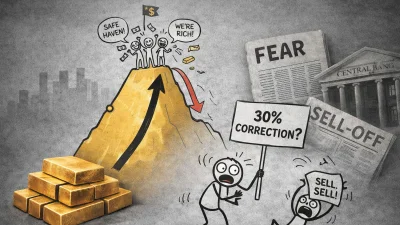
Fast rallies in commodities are almost always driven by emotion. Fear, inflation expectations and geopolitical stress can push prices sharply higher in a very short period of time. But history shows that these moves rarely hold without interruption.
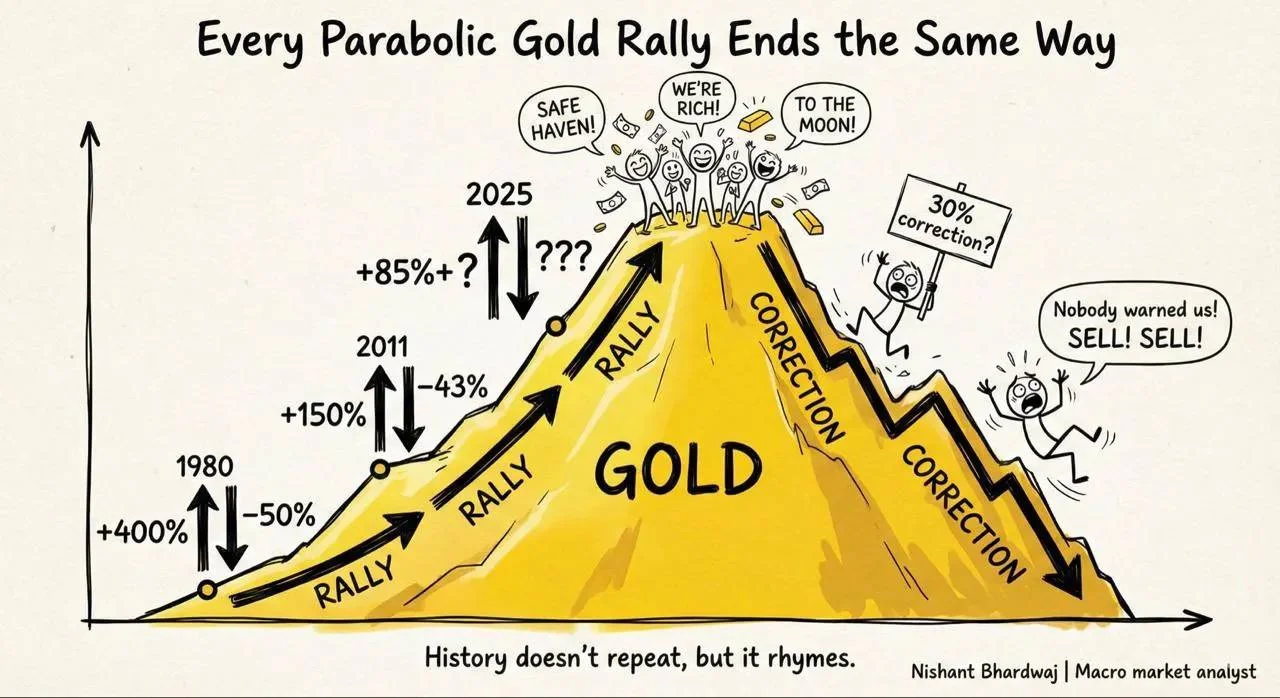
Once prices accelerate too quickly, early participants begin to lock in profits. Momentum slows, selling pressure builds, and the market retraces. Investors who enter during the most emotional phase often end up buying near local highs.
Signs of exhaustion are emerging
The current setup in gold reflects this familiar pattern. The rally has begun to lose momentum, while selling activity is gradually increasing. A correction of 20–30% from recent highs would not be unusual under these conditions.
Such a pullback may feel uncomfortable, but it would represent a healthy reset after a period of overheating rather than a breakdown of the broader trend.
The long-term case for gold remains intact
Importantly, a near-term correction does not invalidate the structural drivers supporting gold. Central banks continue to accumulate reserves, the U.S. dollar remains under pressure, and global debt levels keep rising.
These forces continue to favour gold over a medium- to long-term horizon measured in months and years, not days.
Patience over emotion
The key risk for market participants is not missing the move, but entering at the wrong time. Chasing price during periods of peak optimism often leads to poor risk-reward outcomes.
Waiting for a pullback allows for a more measured entry, with clearer positioning and reduced emotional pressure. In commodities, patience is often rewarded.
History may not repeat itself, but it tends to rhyme.
-
 How Money Really Works From Earning to InvestingBasics
 -
Trying to “Buy the Dip”? These S&P 500 Numbers Tell a Different StoryInvesting Strategies
-
Why Venezuela Matters: Oil, Power and Global Energy MarketsGeopolitics & Regulation
-
Why China Is “Selling” U.S. Treasuries While the U.K. Is “Buying” ThemBonds & Rates
-
Europol Warns of Rising Human–Robot Conflict in Europe by 2035Geopolitics & Regulation
-
Why Emotions Are the Fastest Way to Lose Money in MarketsInvesting Strategies