Why Venezuela Matters: Oil, Power and Global Energy Markets
Developments around Venezuela are drawing global attention, with potential long-term implications for oil markets, geopolitics and U.S.–China relations.
 Olivia Carter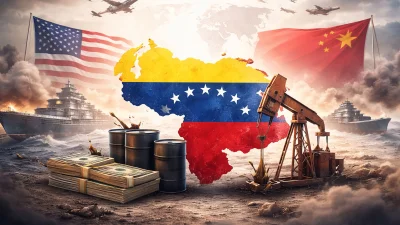
The weekend timing stood out to markets. U.S. officials and major media outlets reported that Venezuelan President Nicolás Maduro was captured in a U.S. operation carried out early Saturday, a move that immediately raised questions about how global markets will price fresh geopolitical risk when trading reopens. The fact it happened on a weekend—when major financial markets were closed—was widely noted by investors as a familiar pattern in high-impact geopolitical events.
Reuters reported the operation involved elite U.S. forces and extensive planning, including intelligence support and rehearsals, culminating in Maduro’s detention and transfer into U.S. custody. President Donald Trump publicly confirmed the capture and framed the operation as a decisive intervention aimed at political change in Venezuela.
Trump links the operation to regime change and energy strategy
In public remarks carried by major outlets, Trump did not rely on the traditional “values” framing often seen in U.S. foreign policy messaging. Instead, he cast the operation in strategic terms—regime change, leverage and energy—arguing the U.S. would oversee a transition and push to restore Venezuela’s oil industry.
According to Reuters, Trump also said U.S. oil companies would invest heavily to rebuild Venezuela’s crude output capacity—an explicit signal that energy is central to the administration’s thesis for what comes next.
Why Venezuela is the prize: reserves vs. exports
Venezuela holds the world’s largest proven oil reserves. Yet it has not been among the top exporters in recent years, with production hampered by chronic underinvestment, infrastructure damage, sanctions pressure, and broad economic and institutional deterioration.
That gap between vast reserves and constrained export capacity is the core of the “strategic prize” argument now dominating market debate: if Venezuela’s output were meaningfully restored—and if Western majors were allowed to operate at scale—the country could eventually re-emerge as a major exporter, reshaping Atlantic Basin supply and shifting bargaining power across global energy markets.
The blockade that set the stage
The operation followed an escalation in U.S. pressure late last year. Reuters reported that in mid-December Trump ordered a “blockade” targeting sanctioned oil tankers entering or leaving Venezuela, intensifying restrictions around the country’s crude flows. That move was widely viewed as a pressure tactic that could reduce exports and tighten near-term supply at the margin.
The sequence—blockade first, then the weekend capture—has fueled a broader market narrative that Venezuela has shifted from being primarily a sanctions story to a full-spectrum geopolitical risk story.
Market implications: oil, risk premia, and uncertainty
In the immediate term, the key variable for energy markets is whether the situation leads to disruptions or to a pathway that increases exports. Those are very different outcomes, and traders will likely treat the headlines as “high volatility / low visibility” until a clearer policy framework emerges.
- Near-term risk: escalation, operational disruptions, legal disputes, and regional instability—typically supportive of higher risk premia in crude.
- Medium-term upside supply scenario: if policy changes enable investment and infrastructure repair, Venezuela could add barrels over time—potentially bearish for prices later, depending on OPEC+ response and global demand.
- Policy uncertainty: the biggest driver for pricing may be uncertainty itself—who governs, how contracts are handled, what sanctions regime applies, and the probability of retaliation or spillover.
The China question: energy as leverage
Another core issue is China. Over recent years, China has been one of the most important end-buyers of Venezuelan crude, directly or indirectly. If Venezuela’s oil sector and export channels are restructured under a U.S.-backed transition, access to those barrels could become a negotiating lever in U.S.–China relations.
Public messaging suggested China would not be “cut off” from oil markets, but investors understand that the marginal barrel—and who controls it—can become a bargaining chip even when global supply is ample. In other words: not a question of whether China can buy oil, but on what terms, from whom, and with what strategic trade-offs.
Broader signal risk: what markets may infer next
Some commentators are already interpreting the Venezuela operation as a broader signal about U.S. willingness to use force to reshape outcomes in strategic commodity regions. That interpretation—right or wrong—can influence how markets handicap other flashpoints and tail risks, including in Asia.
For now, investors face a classic geopolitical setup: high confidence that the story matters, low confidence about how it evolves. The next concrete details—transition arrangements, sanctions posture, oil-sector governance, and international reaction—will determine whether this becomes a brief shock or a lasting repricing of political risk.
-
 Europol Warns of Rising Human–Robot Conflict in Europe by 2035Geopolitics & Regulation
 -
After Maduro Bet Windfall, U.S. Congress Targets Insider Trading on Prediction MarketsGeopolitics & Regulation
-
Greenland Annexation and Statehood Act Filed in U.S. CongressGeopolitics & Regulation
-
Trump’s Greenland Tariff Threat Sends U.S. Futures Down, Europe Sells OffGeopolitics & Regulation
-
America’s Energy Infrastructure May Not Withstand the AI SurgeGeopolitics & Regulation
-
Bank of Russia Unveils New Framework for Cryptocurrency RegulationGeopolitics & Regulation