Trump’s Greenland Tariff Threat Sends U.S. Futures Down, Europe Sells Off
U.S. futures slid after Trump threatened new tariffs tied to a Greenland dispute, driving a risk-off move that pushed gold above $4,700 and lifted volatility.
 Olivia Carter
Geopolitical escalation is firmly back in focus, driving a renewed risk-off move across global markets.
Tariff risks hit markets
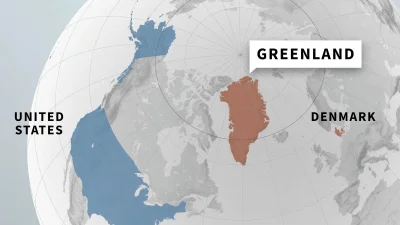
U.S. equity futures declined more than 1% after President Donald Trump said the United States plans to impose a 10% tariff on goods from eight NATO countries starting February 1, including the UK, Germany and France. The tariff would increase to 25% from June 1 unless an agreement related to Greenland is reached.
The announcement triggered immediate sell-offs across European equity markets and set a negative tone ahead of the U.S. session.
Political rhetoric escalates
Tensions intensified further after Trump threatened a 200% tariff on French wine in response to President Emmanuel Macron refusing to join what Trump described as a “Peace Council”. The proposed initiative reportedly included an invitation to Russian President Vladimir Putin.
The episode reinforced concerns that trade policy may once again be used as a geopolitical pressure tool, increasing uncertainty for global investors.
Safe havens lead the move
Rising geopolitical and trade risks supported demand for defensive assets. Gold surged to fresh all-time highs, exceeding $4,700 per ounce, while silver continued to extend its record-breaking rally.
Instability in Venezuela added to the broader risk backdrop, contributing to elevated demand for protection across commodity and currency markets.
Macro data in focus
From a macro perspective, attention turns to U.S. economic data. Today, the Philadelphia Fed releases its non-manufacturing business activity report. The previous reading stood at -16.8, keeping markets alert for signs of continued weakness.
Later this week, investors will focus on U.S. GDP data and the core PCE inflation index, both of which are likely to shape expectations around growth and monetary policy.
Market levels and positioning
The risk balance remains skewed to the downside amid rising volatility. The S&P 500 is being watched in a near-term range between 6,800 and 6,940, with futures already drifting toward the lower boundary. The 6,800 level stands out as key support.
Nasdaq futures have broken below the lower boundary of a medium-term rising channel and are approaching the 25,000 level, which traders now view as an important technical reference.
What’s moving markets now
- Equity futures are under pressure as tariff risks resurface.
- U.S. GDP and core PCE inflation data are the key macro events this week.
- ADP employment figures are due today, adding another checkpoint for growth expectations.
- Treasury yields are rising sharply, with the 10-year yield pushing toward 4.28%.
Sectors and intermarket signals
Cyclical sectors showed mixed performance. Real estate and defence-related names led gains, while materials and retail lagged.
Growth sectors were also mixed, with semiconductors and IPO-linked stocks outperforming, while cloud and cannabis-related names remained under pressure.
Defensive sectors weakened, with healthcare approaching a test of its local uptrend.
- Oil prices remain under pressure below $60.
- Volatility is rising, with the VIX moving toward the 20 level.
- Gold continues to act as the clearest signal of risk aversion.
Volatility is picking up as tariff risks return to the foreground. Until geopolitical tensions ease or macro data decisively improve sentiment, markets are likely to remain headline-driven and defensively positioned.
-
 Why Venezuela Matters: Oil, Power and Global Energy MarketsGeopolitics & Regulation
 -
Europol Warns of Rising Human–Robot Conflict in Europe by 2035Geopolitics & Regulation
-
Greenland Annexation and Statehood Act Filed in U.S. CongressGeopolitics & Regulation
-
After Maduro Bet Windfall, U.S. Congress Targets Insider Trading on Prediction MarketsGeopolitics & Regulation
-
Bank of Russia Unveils New Framework for Cryptocurrency RegulationGeopolitics & Regulation
-
America’s Energy Infrastructure May Not Withstand the AI SurgeGeopolitics & Regulation