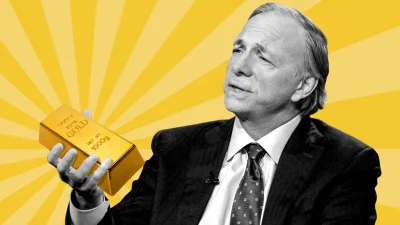
Gold’s Rally Challenges Buffett-Era Skepticism
Gold surged above $5,100 per ounce, extending a historic rally driven by geopolitical risk, central bank demand, and growing doubts about the global financial system.
 Olivia Carter
Gold is rewriting market history. Prices continued to set fresh all-time highs, with the February futures contract on the CME first breaking above $5,000 per ounce and then extending gains beyond $5,100.
The speed of the move has been striking. It took the market just three months to climb from $4,000 to $5,000 — a pace rarely seen in the modern history of the metal.
A Rally Driven by More Than Momentum
Gold gained more than 64% over the past year, as investors sought protection amid escalating geopolitical tensions in the Middle East and Eastern Europe, expectations of lower Federal Reserve rates, and record purchases by central banks.
Those purchases reflect a broader trend: reserve diversification and a deliberate reduction in exposure to the U.S. dollar. For many monetary authorities, gold has once again become a strategic asset rather than a tactical hedge.
The Skeptics’ Argument — and Why It’s Being Revisited
Gold has long faced criticism from prominent investors. Warren Buffett has repeatedly argued that the metal produces no cash flow and is bought largely on the belief that someone else will pay more for it later.
His long-time partner Charlie Munger echoed that view, noting that gold tends to perform best only when the world is in serious trouble — hardly an attractive investment thesis.
In theory, those arguments remain valid. Gold generates no income and carries storage and insurance costs. But the post-2022 investment landscape has forced many investors to reassess those assumptions.
A Shift in the Definition of Risk
Recent years have demonstrated how quickly reserves can be frozen or seized, and how political decisions can override legal and financial norms. At the same time, record budget deficits across major economies have raised questions about long-term fiscal sustainability.
Against this backdrop, the choice increasingly comes down to a trade-off: earn yield on assets that may be exposed to political or legal risk, or hold a non-yielding asset that exists outside the financial system.
For a growing segment of investors, the cost of holding gold now appears to be a lesser risk than potential losses on instruments once considered “safe” and reliable.
Structural Demand, Not Just Speculation
While speculative flows have undoubtedly amplified the move, gold’s current rally appears more fundamentally driven than many initially expected. Central bank demand, geopolitical uncertainty and concerns about the resilience of the global financial architecture have reshaped its role in portfolios.
In today’s environment, gold is increasingly viewed not as a return-generating asset, but as insurance. And judging by recent price action, that insurance is in exceptionally high demand.
-
 SLV in Focus as Silver Enters a New Structural PhaseCommodities
 -
A Massive Technical Breakout Suggests Silver’s Run Might Just Be BeginningCommodities
-
Central Banks Now Hold More Gold Than U.S. TreasuriesCommodities
-
Central Banks Step Up Strategic Gold Accumulation Amid Macro UncertaintyCommodities
-
Ray Dalio Says Investors Should Hold More Gold Right NowCommodities
-
Why Copper Is Outperforming Gold — And What It Means for Metals MarketsCommodities