Gold–Silver Ratio Hits 13-Year Low, Raising Reversal Risks
The gold–silver ratio has fallen to its lowest level in over 13 years, historically a signal that leadership between the two metals may soon shift.
 Olivia Carter
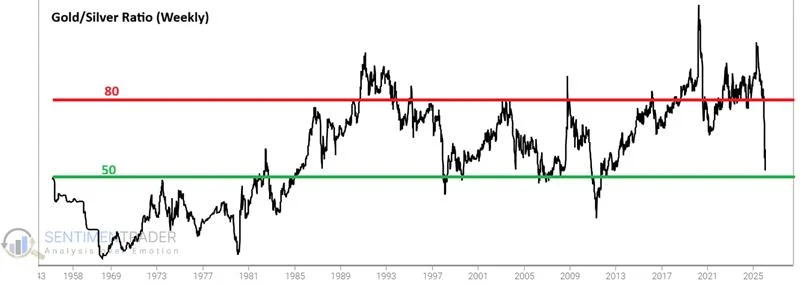
The gold–silver ratio has dropped to its lowest level in more than 13 years, reaching a zone that has historically marked major turning points in relative performance between the two metals.
Such extremes have rarely persisted for long. In past cycles, similar levels were followed by pronounced periods of outperformance by one metal — eventually reversing in the opposite direction.
Why the Ratio Matters
The gold–silver ratio measures how many ounces of silver are required to purchase one ounce of gold. When the ratio falls sharply, it typically reflects strong silver outperformance, often driven by speculative demand or cyclical optimism.
Historically, readings near current levels have coincided with crowded positioning and rising asymmetry in risk.
History Points to Rotation, Not Continuation
Past episodes show a recurring pattern: extended periods where either gold or silver clearly dominates, followed by sharp reversals. Once the ratio reaches extreme lows, the balance between the two metals tends to shift. That doesn’t necessarily imply an immediate correction — but it does suggest diminishing marginal upside in the current leader without a reset.
From a relative-value perspective, the ratio now sits well below its long-term equilibrium range. In isolation, this would argue for either a pause in silver’s outperformance or a relative rebound in gold. In simple terms, the setup for a correction is forming.
The Macro Backdrop Complicates the Signal
Despite stretched relative positioning, the broader macro environment remains supportive for precious metals. Elevated geopolitical risk, fiscal uncertainty and continued demand for hard assets have so far limited downside pressure. This tension explains why the ratio can remain at extreme levels longer than fundamentals alone would suggest.
The key question is not whether the ratio is extreme — it is — but whether the external backdrop begins to shift.
- A moderation in risk appetite could favour gold over silver
- Cooling speculative flows may reduce silver’s momentum
- Macro shocks could reinforce gold’s defensive role
For now, the signal is clear but early. The gold–silver ratio is flashing a warning that relative leadership is stretched — even if the broader environment continues to delay a full adjustment.
-
 SLV in Focus as Silver Enters a New Structural PhaseCommodities
 -
A Massive Technical Breakout Suggests Silver’s Run Might Just Be BeginningCommodities
-
Why Silver Could Significantly Outperform the S&P 500 in the Years AheadCommodities
-
Oil Reaches Parity With Silver for First Time Since 1980Commodities
-
Are Commodities Setting Up for a New Supercycle in 2026?Commodities
-
Silver’s Rally Is Reviving an Old Signal for Oil MarketsCommodities