Copper Set to Become the Next Strategic Commodity
Global copper demand is projected to outstrip supply by a wide margin, with a potential 10 million ton deficit by 2040 driven by electrification, AI and energy transition.
 Olivia Carter
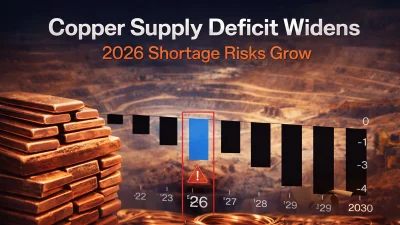
Copper is emerging as the next strategically critical commodity. New projections suggest that global demand will significantly outpace supply over the coming decades, setting the stage for a persistent and structural deficit.
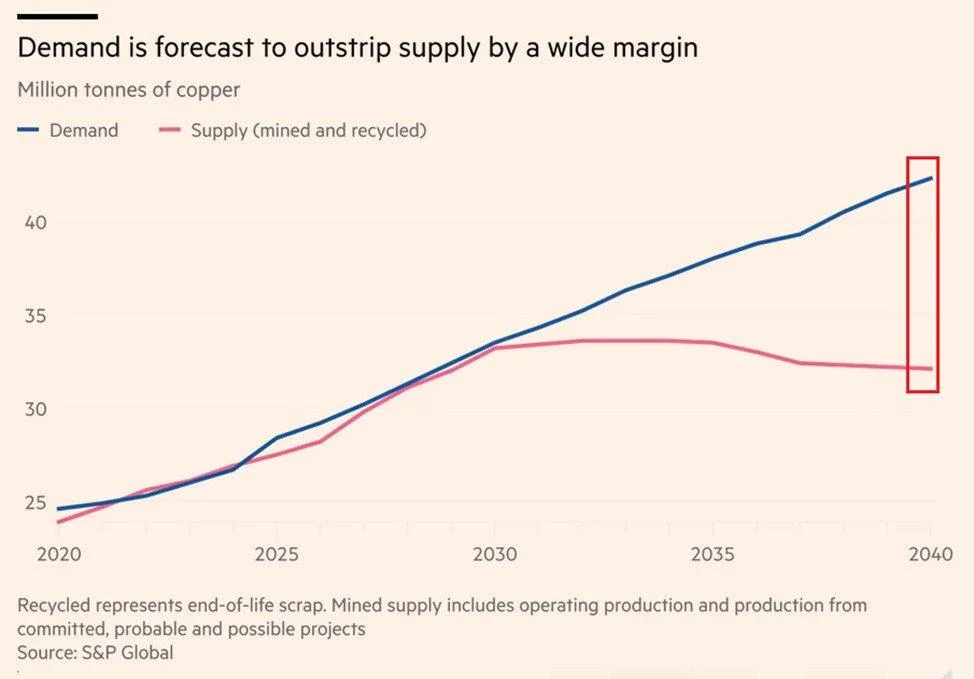
By 2040, the global economy could face a copper shortfall of around 10 million tonnes — equivalent to roughly 33% of current global demand.
Demand Growth Accelerates
Global copper demand is expected to rise sharply, reaching approximately 42 million tonnes by 2040, up from around 28 million tonnes in 2025.
The bulk of this growth is projected to come from Asia, which is expected to account for nearly 60% of the total increase in demand. Key drivers include the rapid adoption of electric vehicles, large-scale electrification projects and the ongoing expansion and modernisation of power grids.
AI and Data Centres Add a New Demand Layer
A less traditional — but increasingly important — source of copper demand is the expansion of data centres supporting artificial intelligence.
Demand from AI-related infrastructure is projected to grow by 127%, reaching around 2.5 million tonnes by 2040. High-density computing, cooling systems and power transmission all rely heavily on copper-intensive components.
Supply Peaks, Then Declines
On the supply side, the outlook is far less supportive. Total copper supply — including mined and recycled material — is expected to peak at around 34 million tonnes by 2030.
After that, supply is projected to gradually decline, falling to roughly 32 million tonnes by 2040. Aging mines, declining ore grades, long project lead times and growing environmental constraints all limit the industry’s ability to respond quickly to rising demand.
A Structural, Not Cyclical, Imbalance
The growing gap between demand and supply suggests that copper’s challenge is not a short-term cyclical imbalance, but a structural one.
Unlike previous commodity cycles, where higher prices eventually unlocked sufficient new supply, copper faces physical, regulatory and geopolitical constraints that make rapid capacity expansion increasingly difficult.
In this context, copper is evolving from an industrial input into a strategic asset — essential for electrification, digital infrastructure and long-term economic growth.
As the global energy and technology transition accelerates, copper may become one of the defining bottlenecks of the next decade.
-
 Copper Supply Shock Deepens as 2026 Deficit Risks GrowCommodities
 -
Why Copper Is Outperforming Gold — And What It Means for Metals MarketsCommodities
-
Why Copper Prices Are Surging to Record LevelsCommodities
-
SLV in Focus as Silver Enters a New Structural PhaseCommodities
-
A Massive Technical Breakout Suggests Silver’s Run Might Just Be BeginningCommodities
-
Central Banks Step Up Strategic Gold Accumulation Amid Macro UncertaintyCommodities