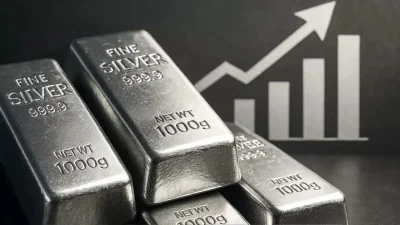
Gold’s Parabolic Rally Is Not Random — It’s a Warning Signal
Gold’s parabolic rally reflects growing concerns over fiat currencies, de-dollarisation and rising stress in the real economy, despite stock market highs.
 Olivia Carter
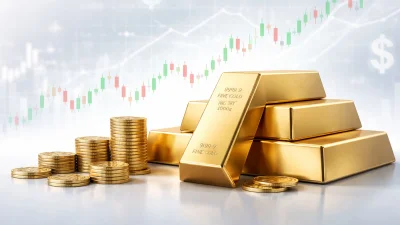
Gold’s recent parabolic rise is not a coincidence. It is a signal — and a deeply concerning one — about the state of the global financial system.
While equity indices continue to print record highs, gold is sending a very different message. One that points to eroding confidence in fiat currencies, rising systemic risks, and a widening gap between financial markets and the real economy.
The Dollar Is Losing Purchasing Power
The decline in the U.S. dollar’s real value is no longer a theoretical debate. It is an observable fact supported by data.
Since 2020, cumulative official inflation in the United States has reached roughly 20–25%. For households, the effective loss of purchasing power feels significantly larger. Rising costs for housing, food, energy, and services have outpaced wage growth, leaving many consumers under growing financial pressure.
Beyond domestic inflation, the dollar is also facing a structural challenge to its role as the world’s uncontested reserve currency.
De-Dollarisation Is Gaining Momentum
Several major economies have been steadily reducing exposure to U.S. debt. China has sold more than $300 billion in U.S. Treasuries over the past two years, a move widely seen as strategic rather than cyclical.
Japan, traditionally the largest foreign holder of U.S. government bonds, has also been cutting its positions. At the same time, BRICS countries are actively exploring trade settlement in local currencies and alternative payment systems.
What unites these trends is not just diversification — it is a deliberate shift away from dollar dependency.
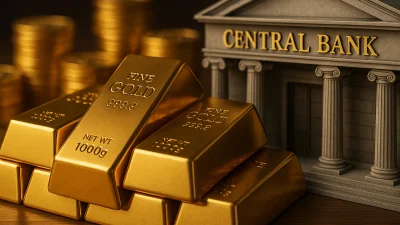
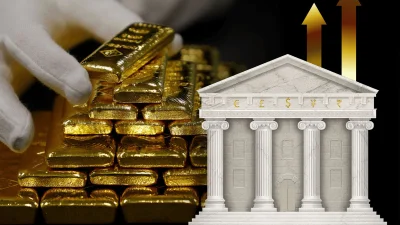
Central Banks Are Buying Gold at Record Levels
Central bank gold purchases reached historic highs in 2023, with more than 1,000 tonnes added globally — the largest annual total on record. The trend has continued into 2024, with no signs of slowing.
China, Turkey, India, Poland, Singapore and several Middle Eastern countries have all increased their gold reserves. In some cases, official figures likely understate the true scale of accumulation.
The motivation is clear: gold remains one of the few reserve assets that does not carry counterparty risk, political exposure, or dependence on monetary policy decisions.
Stock Market Highs Do Not Equal Economic Strength
Equity markets, particularly the S&P 500, continue to trade near historic highs. But stock market performance is not the same as economic health.
The equity market primarily reflects corporate profitability and financial flows, benefiting a relatively small share of the population. The broader economy, by contrast, is shaped by wages, employment stability, household debt, and cost of living.
In the real economy, pressures are mounting. Real wages remain under strain, household debt has reached record levels, and delinquency rates on consumer credit are rising. Many households are increasingly reliant on debt simply to maintain their standard of living.
What Gold Is Really Signalling
Gold is not rising because of speculative enthusiasm. It is rising because it represents an asset outside the control of governments and central banks.
Gold cannot be printed. It cannot be diluted by policy decisions. And when held domestically, it cannot be easily weaponised through sanctions.
In this context, gold’s upward trajectory reflects a growing recognition of systemic fragility rather than a short-term trade. From this perspective, corrections are not a reason for concern — they are part of a broader structural re-pricing.
-
 Central Banks Step Up Strategic Gold Accumulation Amid Macro UncertaintyCommodities
 -
Central Banks Now Hold More Gold Than U.S. TreasuriesCommodities
-
SLV in Focus as Silver Enters a New Structural PhaseCommodities
-
Gold’s Rally Challenges Buffett-Era SkepticismCommodities
-
Copper Set to Become the Next Strategic CommodityCommodities
-
A Massive Technical Breakout Suggests Silver’s Run Might Just Be BeginningCommodities