Global Gold Discoveries Hit Zero for Two Years — A First in Recorded History
Global data shows zero major gold discoveries in 2023–2024 — something that has never happened before. Analysts say it may mark the early stage of a powerful metals super-cycle.
 Olivia Carter
For the first time in modern mining history, the world has gone two consecutive years without a single major gold discovery.
According to data cited by Crescat Capital, no new gold deposits of at least 2 million ounces were identified globally in 2023 or 2024. This has never occurred before in the historical record — not during past recessions, not during commodity downturns, and not even during previous periods of underinvestment.
The implications reach far beyond gold.
Gold discoveries collapse to zero
Historically, even weak commodity cycles still produced a handful of meaningful discoveries each year. During stronger periods — such as the 1990s and mid-2000s — annual discoveries routinely reached double-digit figures.
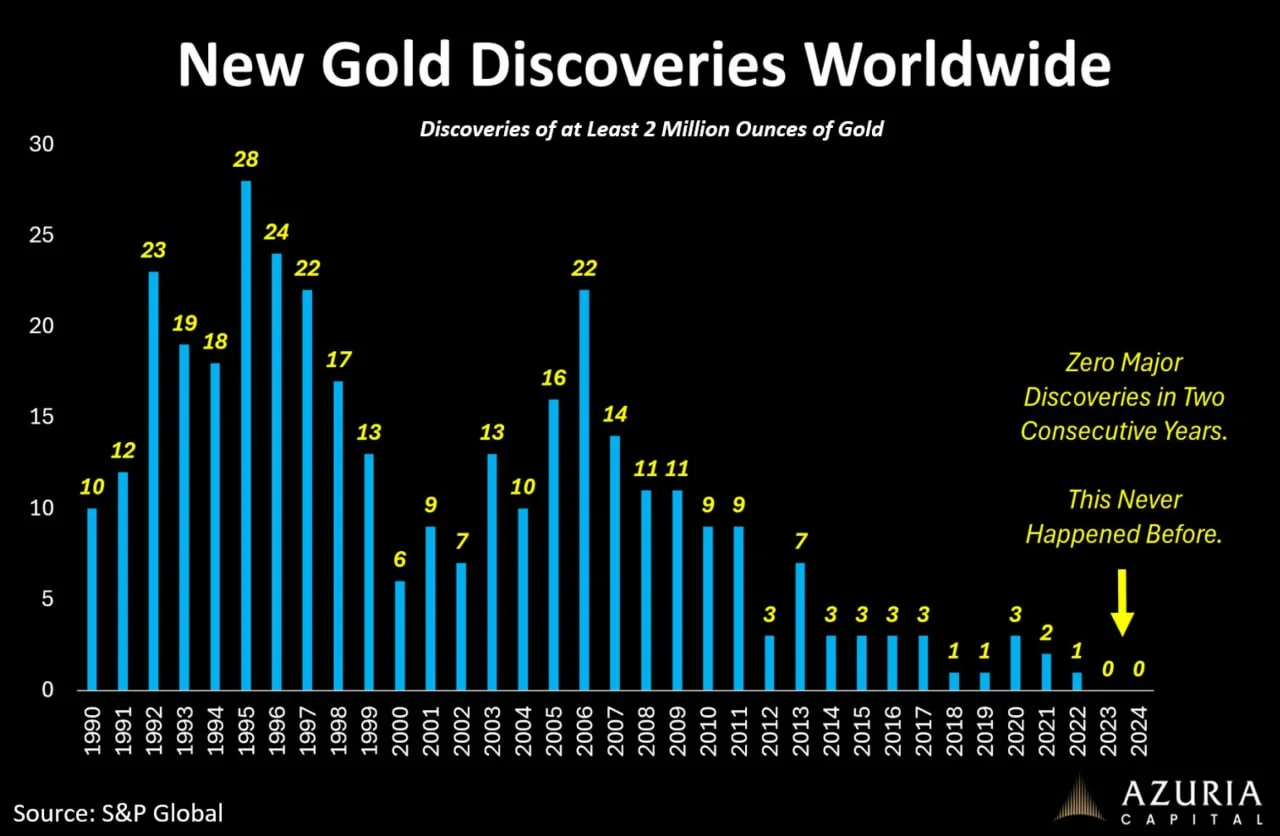
The chart highlights a dramatic structural decline. After steadily falling for more than a decade, discoveries reached an unprecedented low: zero major finds in two consecutive years.
From an editorial perspective, the significance lies not in a single bad year — but in the persistence of the trend (as historical cycles often show).
This is not just a gold story
Analysts stress that gold is not an isolated case. Large discoveries across most industrial and precious metals have fallen into single digits, while the global project pipeline remains thin.
In practical terms, there are currently no large-scale mining projects under development that could materially shift the global supply curve in the coming years.
Exploration budgets have lagged inflation, permitting timelines have lengthened, and geological quality has deteriorated. Even when discoveries occur, bringing them into production often takes a decade or more.
Markets are starting to price the imbalance
While physical supply growth slows, capital markets appear to be waking up to the structural mismatch.
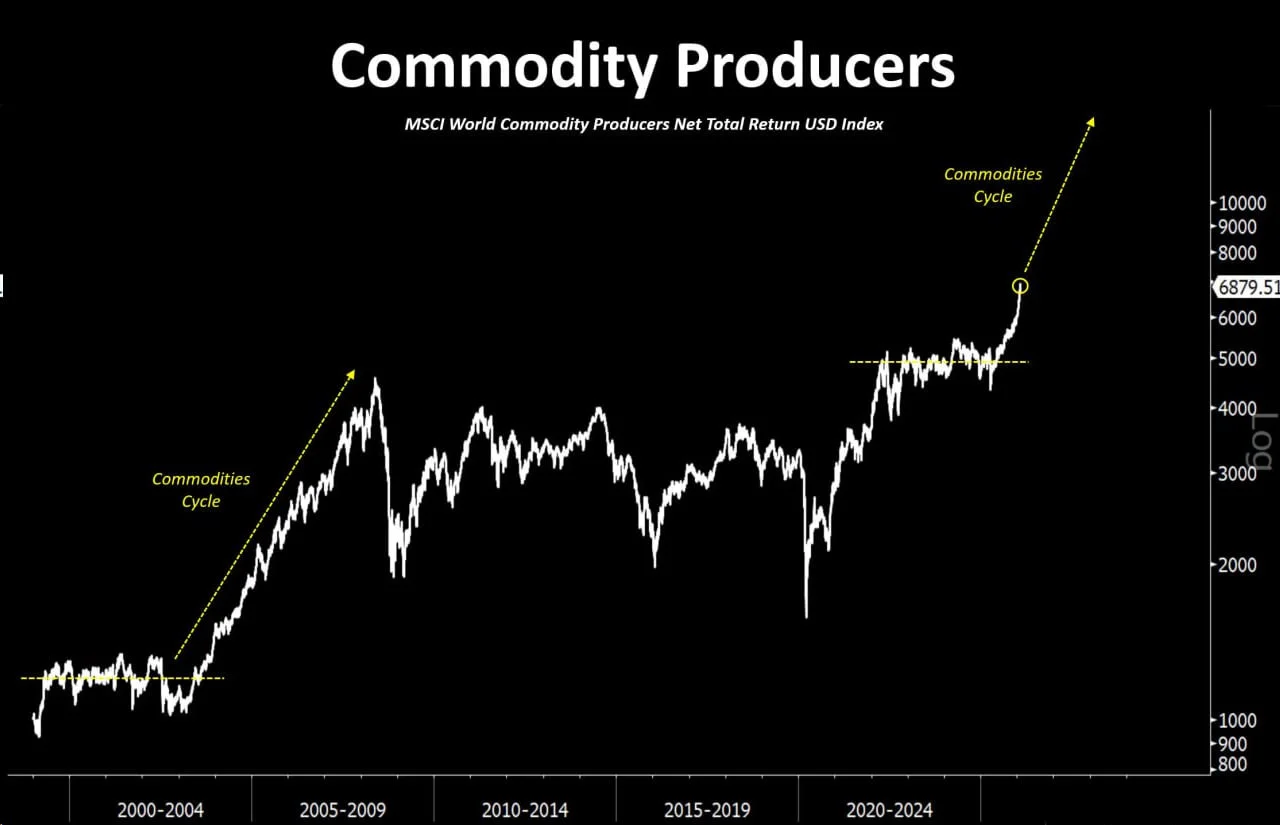
Commodity-linked equities have begun to break out of long consolidation ranges, echoing early stages of previous commodity cycles. The pattern is familiar: prolonged underinvestment, tightening supply, followed by repricing across producers.
Guidance improved. Supply didn’t.
Early phase of a metals super-cycle?
According to Crescat’s analysts, the combination of declining discoveries, limited project pipelines, and rising structural demand suggests that metals markets may still be in the early innings of a broader bull cycle.
Importantly, this view does not rely on short-term macro shocks or speculative flows. It is rooted in geology, timelines, and capital discipline — factors that tend to move slowly, but forcefully.
In past cycles, markets often underestimated how long supply constraints could persist. This time, the constraints appear deeper — and more visible.
Two empty years may turn out to be more than a statistical anomaly. They could mark the moment scarcity became structural.
-
 SLV in Focus as Silver Enters a New Structural PhaseCommodities
 -
A Massive Technical Breakout Suggests Silver’s Run Might Just Be BeginningCommodities
-
Copper Enters a New Cycle After Two Decades of ConsolidationCommodities
-
Why Silver Could Significantly Outperform the S&P 500 in the Years AheadCommodities
-
Why Copper Is Outperforming Gold — And What It Means for Metals MarketsCommodities
-
Gold’s Parabolic Rally Is Not Random — It’s a Warning SignalCommodities