The U.S. Shale Boom Is Fading — and Oil Prices Are Set to Rise
U.S. shale oil production is declining year-on-year for the first time. As drilling slows and wells deplete faster, global oil prices face unavoidable upward pressure.
 Olivia Carter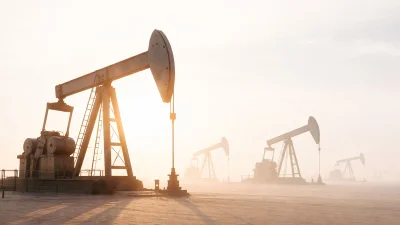
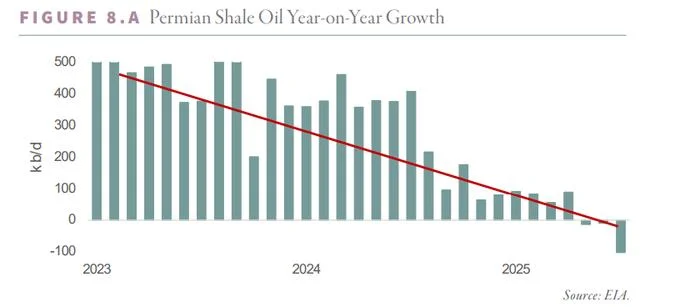
For the first time since the shale revolution began, U.S. shale oil production has moved into year-on-year decline. This is not a cyclical fluctuation — it marks a structural turning point for the global oil market.
A historic inflection point
Over the past decade, U.S. shale accounted for nearly 90% of global oil supply growth. It acted as the world’s shock absorber, capping prices whenever demand accelerated or geopolitical risks intensified.
That role is now fading.
Shale output growth has been steadily weakening since 2023, with recent readings slipping into outright contraction. In practical terms, the single most important source of incremental supply is no longer expanding.
The geological reality of shale
The core issue lies in the nature of shale reservoirs themselves. Unlike conventional fields, shale wells deliver explosive early production — followed by rapid depletion.
A typical shale well loses up to 90% of its output within the first three years. Maintaining production therefore requires constant drilling of new wells, simply to offset natural decline.
Once drilling activity slows, total production follows — with a lag, but inevitably.
Profitability under pressure
This is precisely what is happening now.
Since 2023, the number of active U.S. oil rigs has fallen by roughly 30%. At the same time, margins between shale output prices and drilling costs have compressed by a similar magnitude.
At current oil prices, many new shale wells barely reach breakeven. For producers, aggressive expansion no longer makes economic sense — capital discipline has replaced growth-at-any-cost.
Why higher prices become unavoidable
The market is facing a hard constraint.
Either oil prices rise sufficiently to restore drilling incentives and capital investment — or declining shale supply tightens the market until prices rise organically through scarcity.
In both scenarios, the conclusion is the same.
Oil prices must adjust higher. The era of cheap shale oil that quietly kept global prices in check for more than a decade is drawing to a close — as historical cycles often show.
The shale revolution reshaped the energy landscape. Its slowdown may reshape it once again.
-
 A Massive Technical Breakout Suggests Silver’s Run Might Just Be BeginningCommodities
 -
SLV in Focus as Silver Enters a New Structural PhaseCommodities
-
Global Gold Discoveries Hit Zero for Two Years — A First in Recorded HistoryCommodities
-
Copper Enters a New Cycle After Two Decades of ConsolidationCommodities
-
The Oil Market Looks Weak — and 2026 May Bring More of the SameCommodities
-
Why Copper Is Outperforming Gold — And What It Means for Metals MarketsCommodities