Scotland Plans First Sovereign Bond Sale in 300 Years
Scotland prepares its first sovereign bond sale in 300 years after earning an investment-grade rating, reviving debates over autonomy and market risks.
 Olivia Carter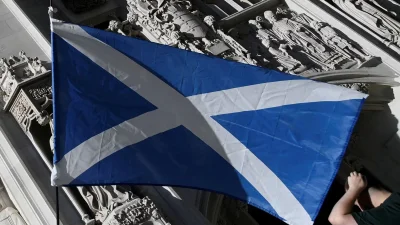
Scotland is preparing to issue its first sovereign bonds in more than three centuries, a move that financial analysts see as both a strategic milestone and a potential political flashpoint. According to The Wall Street Journal, the country’s credit standing has been strengthened by recent assessments from Moody’s and S&P Global, which assigned Scotland the same investment-grade rating as the United Kingdom.
First Minister John Swinney called the ratings a major endorsement, arguing that Scotland is now better positioned to access global capital markets directly. Supporters of the Scottish National Party (SNP) view the bond issuance as a step toward greater financial autonomy—and, ultimately, the long-debated goal of independence.
However, both rating agencies explicitly linked Scotland’s strong credit profile to its continued membership in the UK. Economists warn that even a hint of a renewed push for independence could drive borrowing costs sharply higher, with traders already referring to the planned debt as “kilts.”
Critics question whether the program is worth the risk. Some argue that Scotland could secure cheaper funding by continuing to borrow through London’s established mechanisms, rather than creating what one analyst described as a “real-time barometer” of the financial cost of breaking from the United Kingdom.
The Shadow of Darien
Scotland’s previous attempt to raise capital on its own ended in disaster. In the late 1690s, the country poured roughly a quarter of its national wealth into the ill-fated Darien Scheme—a plan to establish a trading colony on the narrow isthmus between the Caribbean Sea and the Pacific Ocean, in what is now Panama.
Led by financier William Paterson, the project envisioned a bustling trade hub rivaling the East India Company. Instead, Scottish settlers faced disease, starvation, hostile conditions, Spanish attacks, and a lack of support from England’s government, which forbade its ships from assisting the colony.
Only one of the expedition’s ships returned. The economic collapse that followed contributed directly to Scotland agreeing to a political union with England in 1707, forming the foundation of the modern United Kingdom.
A Long-Standing Political Divide
Debates over independence continue to define Scottish politics more than a decade after the 2014 referendum, in which voters chose to remain in the UK. According to the WSJ, Scotland’s economy has since diversified, with expanded tax powers and greater financial autonomy.
Public opinion remains split almost evenly. Officials promoting the new bond issuance say it would strengthen Scotland’s credibility as a standalone economic actor, regardless of the political direction the country ultimately takes.
With the first auction in centuries now on the horizon, markets are watching closely—not only to gauge investor appetite, but also to assess what Scotland’s re-entry into sovereign debt markets may signal for the broader future of the United Kingdom.
-
 Europol Warns of Rising Human–Robot Conflict in Europe by 2035Geopolitics & Regulation
 -
Why Venezuela Matters: Oil, Power and Global Energy MarketsGeopolitics & Regulation
-
Greenland Annexation and Statehood Act Filed in U.S. CongressGeopolitics & Regulation
-
Trump’s Greenland Tariff Threat Sends U.S. Futures Down, Europe Sells OffGeopolitics & Regulation
-
After Maduro Bet Windfall, U.S. Congress Targets Insider Trading on Prediction MarketsGeopolitics & Regulation
-
America’s Energy Infrastructure May Not Withstand the AI SurgeGeopolitics & Regulation