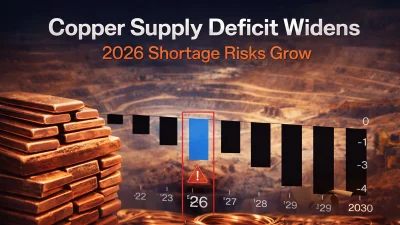
Copper Prices Rise as Chile’s Production Falls, Setting Up a 2026 Supply Squeeze
Copper prices are holding near long-term resistance as Chilean production declines, strengthening the case for a supply-driven rally into 2026.
 Olivia Carter
Copper markets are showing early signs of a tightening supply-demand balance, as prices push higher while production in Chile — the world’s largest copper producer — continues to trend lower.
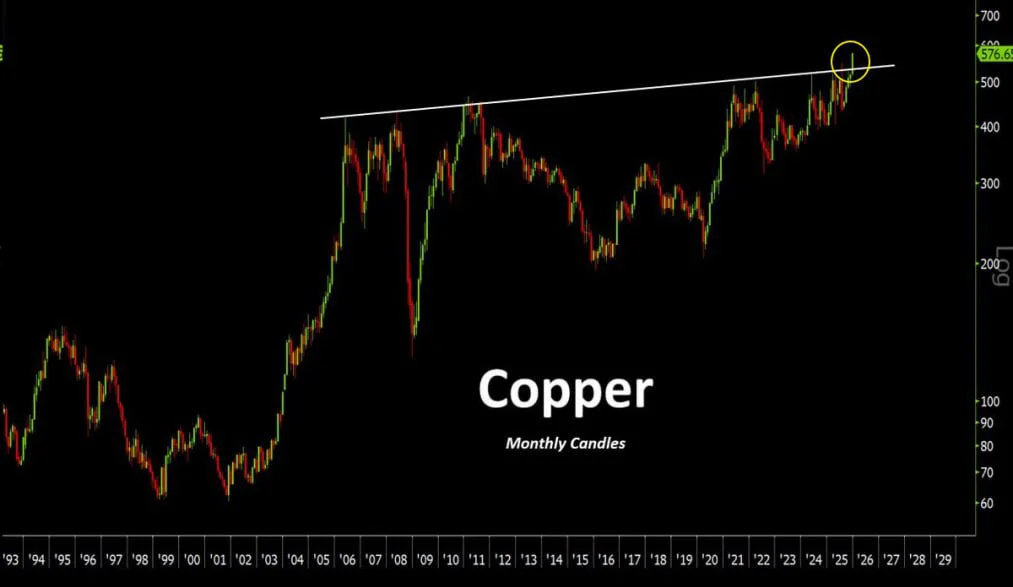
Prices press resistance
On long-term charts, copper prices are trading near a multi-decade resistance zone, with monthly candles showing persistent upside pressure. The structure suggests growing acceptance at higher levels rather than a speculative spike.
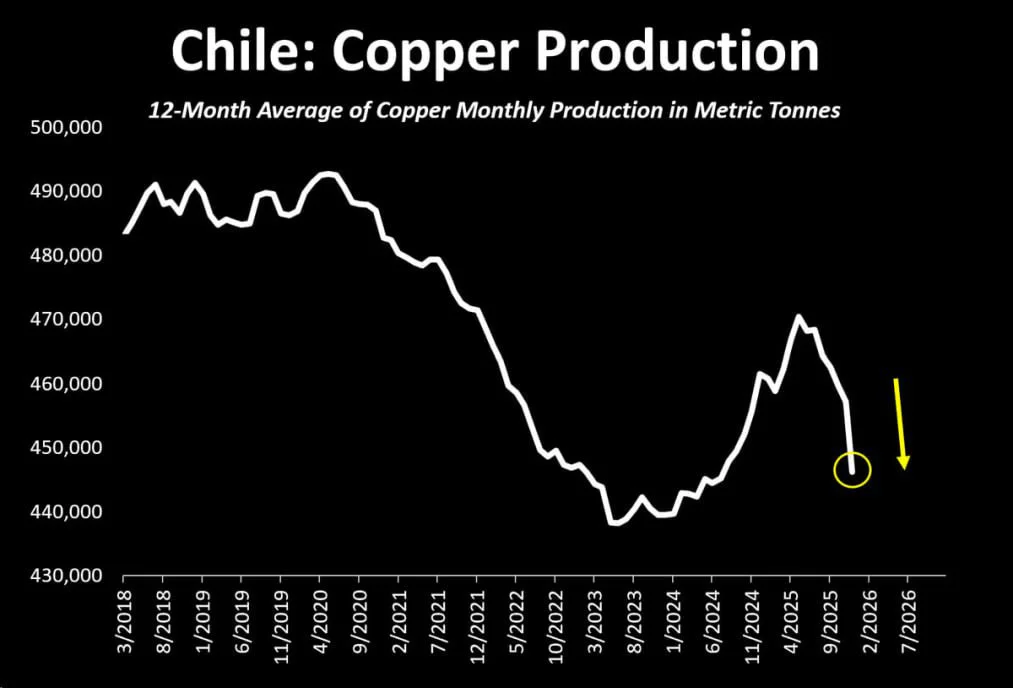
Chile production trends lower
Chile, which accounts for roughly 25% of global copper production, has seen a sustained decline in output. The 12-month average of monthly copper production has rolled over sharply since 2020 and remains well below prior cycle peaks.
Recent data shows production struggling to recover, with fresh weakness emerging into late 2025 — a signal that supply constraints may be structural rather than cyclical.
Supply risks dominate the outlook
Declining ore grades, higher extraction costs, water constraints, and underinvestment in new large-scale projects continue to weigh on Chilean output. These factors limit the ability of supply to respond quickly to higher prices.
At the same time, demand expectations remain supported by electrification, grid expansion, EV penetration, and energy transition-related infrastructure.
2026 shaping up as a key year
According to analysts at Crescat Capital, copper could emerge as one of the most important macro commodities in 2026, driven by tightening physical supply and long-cycle underinvestment.
From a market perspective, the divergence between rising prices and falling production strengthens the case for a structural bull phase rather than a short-term trade.
-
 Copper Supply Shock Deepens as 2026 Deficit Risks GrowCommodities
 -
Why Copper Is Outperforming Gold — And What It Means for Metals MarketsCommodities
-
A Massive Technical Breakout Suggests Silver’s Run Might Just Be BeginningCommodities
-
Are Commodities Setting Up for a New Supercycle in 2026?Commodities
-
Why Copper Prices Are Surging to Record LevelsCommodities
-
Lithium’s 2026 “Air Pocket” May Be the Pause Before the Next Structural RallyCommodities